3210 Wilkinson Blvd, Ste. B-2, Charlotte, NC 28208
What Happens to Your Natural Teeth During Veneer Placement

Many Charlotte patients ask the same question before starting treatment: what actually happens to your natural teeth during veneer placement? It is a fair concern. After all, veneers are a permanent change. Understanding what happens to your natural teeth during veneer placement in Charlotte helps you make a confident, informed decision. At Urban Family Dental, Dr. Raj Dolia walks every patient through each step before a single tool is picked up. This article explains the full process — from your first consultation to the moment your final veneers are bonded in place.
Your Consultation and Shade Selection: Where the Process Begins
The veneer journey starts well before any enamel is touched. Your first appointment is a thorough consultation with Dr. Dolia. He will examine your teeth, review your dental and medical history, and discuss exactly what you hope to achieve.
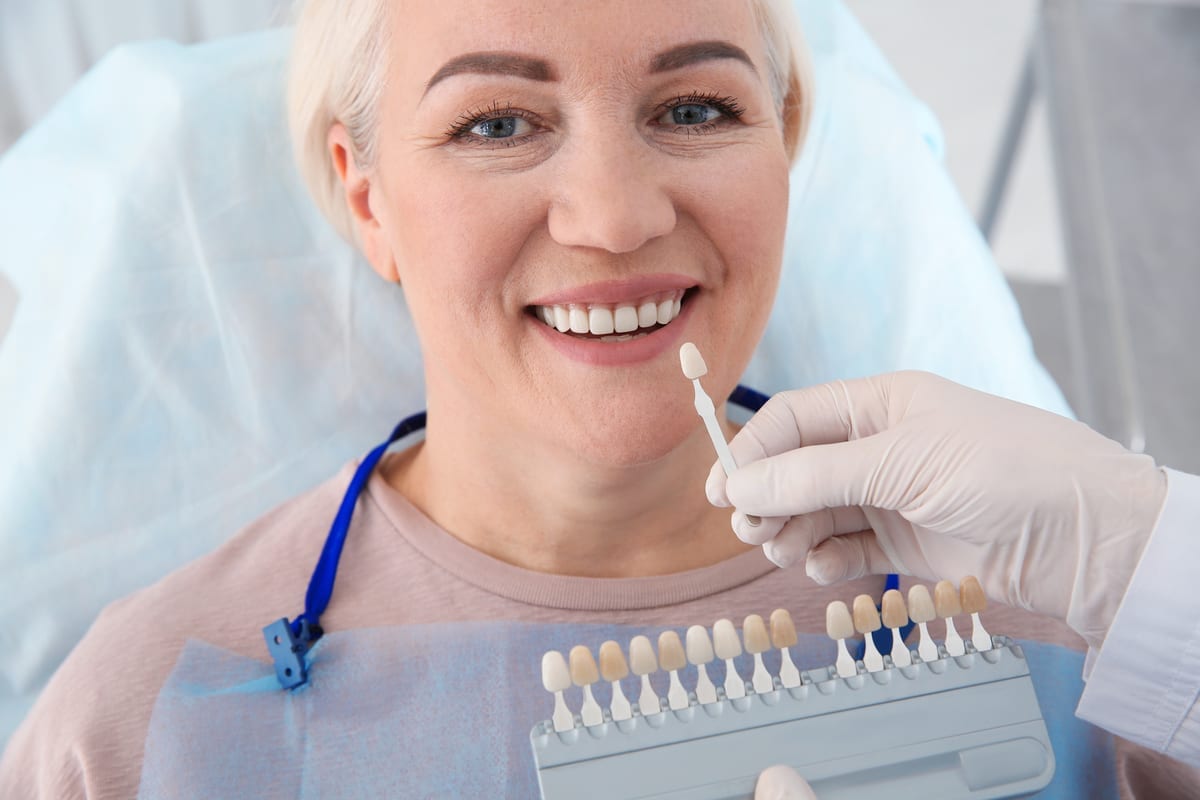
Shade selection is one of the most important parts of this stage. Dr. Dolia uses a professional shade guide to match your veneers to your surrounding teeth. If you also plan to whiten your natural teeth, that step should happen before veneer shade selection. Veneers do not respond to whitening treatments once they are placed.
Digital imaging or smile design tools may also be used at this stage. These give you a preview of your expected results. This is your opportunity to ask questions and set realistic expectations about the final look. Choosing the right shade sets the tone for everything that follows.
What Happens to Your Enamel During Veneer Preparation in Charlotte
This is the step patients most want to understand. To place a veneer, your dentist must remove a thin layer of enamel from the front surface of your tooth. The amount removed is typically between 0.3 and 0.7 millimeters — roughly the thickness of a contact lens.
This reduction is necessary for two reasons. First, it creates a rough surface that allows the veneer to bond securely. Second, it ensures the veneer sits flush with your surrounding teeth and does not look bulky or unnatural.
Because enamel does not grow back, this step makes veneers a permanent commitment. Once your enamel is reshaped, your tooth will always need a veneer or similar restoration to protect it. Dr. Dolia takes a conservative approach, removing only what is necessary to achieve a natural result.
- A small amount of enamel is permanently removed from each treated tooth
- The reduction is minimal — typically less than one millimeter
- Local anesthesia is available to keep you comfortable during preparation
- The reshaped tooth is more vulnerable without its veneer in place
- This step cannot be reversed, making the decision to get veneers permanent
The Temporary Veneer Phase: Protecting Your Teeth Between Appointments
After your enamel is prepared, Dr. Dolia takes precise impressions or digital scans of your teeth. These are sent to a dental laboratory where your custom veneers are crafted. This process typically takes one to two weeks.
During that time, your prepared teeth need protection. Temporary veneers are placed over each tooth to shield the exposed surface. These temporaries are not as durable or polished as your final veneers, but they serve an important purpose.
You may notice some sensitivity to hot or cold during this phase. That is normal. Your enamel has been reduced, and the temporary veneers do not seal as perfectly as the final restorations will. Avoid hard, crunchy, or sticky foods while wearing temporaries. This reduces the risk of a temporary veneer coming loose before your final appointment.
The temporary phase also gives you a chance to evaluate the size and shape of your new smile. If something does not feel right, communicate that to Dr. Dolia before your final veneers are fabricated.
Final Bonding: How Your Permanent Veneers Are Secured
When your custom veneers arrive from the laboratory, you return for your final appointment. Dr. Dolia will first place each veneer without cement to check the fit, shape, and colour. Small adjustments can be made at this stage.
Once everything looks correct, your teeth are cleaned and conditioned. A special bonding agent is applied to the surface of each prepared tooth. The veneer is then set in place with dental cement and hardened using a curing light.
After bonding, any excess cement is carefully removed. Your bite is checked and refined as needed. The entire bonding appointment typically takes one to two hours depending on how many veneers are placed.
- Each veneer is individually fitted and checked before bonding begins
- A bonding agent chemically attaches the veneer to your natural tooth
- A curing light hardens the cement within seconds
- Your bite is adjusted until it feels completely natural
- Final polishing gives your veneers a smooth, lifelike finish
Caring for Your Natural Teeth After Veneer Placement
Veneers are durable, but they are not indestructible. The natural tooth structure underneath still needs care. Brushing twice daily and flossing regularly remain essential habits after your veneers are placed.
Avoid using your veneers to bite hard objects like ice, fingernails, or pen caps. These habits can chip or fracture the porcelain. If you grind your teeth at night, Dr. Dolia may recommend a custom nightguard to protect both your veneers and your natural teeth beneath them.
Routine check-ups at Urban Family Dental are also important. Dr. Dolia will monitor the condition of your veneers and the health of your surrounding teeth at every visit. Well-maintained veneers can last ten to fifteen years or longer with proper care.
If you ever experience unexpected pain or discomfort after veneer placement, do not ignore it. While rare, issues can arise that need prompt attention. Urban Family Dental also offers Emergency Dentistry Charlotte patients can rely on when something feels wrong between scheduled visits.
Is Veneer Placement Right for You?
Veneers are one of the most effective tools in Cosmetic Dentistry Charlotte patients have access to today. They can correct chips, cracks, discolouration, gaps, and minor misalignment in a relatively short timeline.
However, they are not the right solution for everyone. Patients with significant tooth decay, gum disease, or very little remaining enamel may need other treatments first. Dr. Dolia will assess your overall oral health before recommending veneers.
The best candidates are patients with healthy teeth who want to improve the appearance of their smile. Understanding what happens to your natural teeth during veneer placement in Charlotte empowers you to ask the right questions and feel confident in your choice.
Frequently Asked Questions
Does veneer placement hurt?
Most patients experience little to no discomfort during preparation. Local anesthesia is used to numb the area before enamel is removed. Some sensitivity is common during the temporary veneer phase, but this typically resolves once the final veneers are bonded in place.
How much enamel is removed for veneers?
Dr. Dolia removes a very thin layer of enamel — usually between 0.3 and 0.7 millimeters. This is roughly the same thickness as the veneer itself. The goal is to create a natural look without adding bulk to the tooth’s surface.
Can I get veneers on just a few teeth?
Yes. Many patients choose veneers for only the teeth visible when they smile, often the upper front six to eight teeth. Dr. Dolia will help you determine how many veneers are needed to create a balanced, natural-looking result.
How long does the full veneer process take?
From consultation to final bonding, the process typically spans two to four weeks. Your first appointment covers the consultation and preparation. A second appointment places your permanent veneers after the laboratory has finished crafting them.
Are veneers permanent?
Because enamel is permanently removed during preparation, veneers are considered an irreversible treatment. Your tooth will always require a veneer or similar restoration going forward. With proper care, quality porcelain veneers can last ten to fifteen years or more before needing replacement.
If you are ready to learn what veneer placement could do for your smile, Dr. Raj Dolia and the team at Urban Family Dental in Charlotte are here to guide you through every step. Book Now to schedule your appointment with our team.
By Urban Family Dental

New patients and emergency appointments welcome