3210 Wilkinson Blvd, Ste. B-2, Charlotte, NC 28208

Professional Teeth Whitening Safety


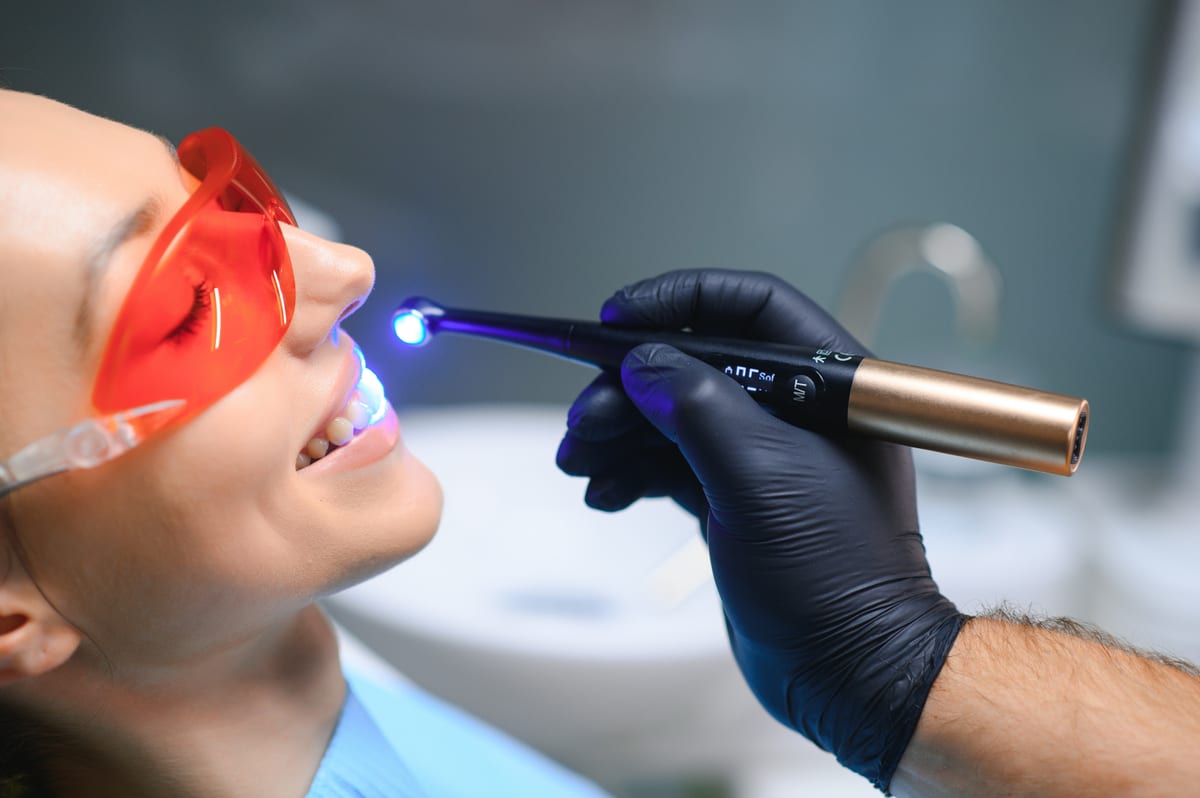
Many Charlotte patients ask the same question before booking a whitening appointment: is professional teeth whitening safe for your enamel and gums? It is a fair concern. You want a brighter smile, but not at the cost of your dental health. The good news is that professional whitening, when done correctly, is considered safe for most healthy adults. This article breaks down what the research says, who should be cautious, and what Dr. Raj Dolia at Urban Family Dental recommends for patients in Charlotte, NC.
How Professional Teeth Whitening Works on Enamel
Professional whitening uses hydrogen peroxide or carbamide peroxide as the active bleaching agent. These compounds penetrate the outer enamel layer and break apart stain molecules. The enamel itself is not dissolved or removed during this process. Instead, the gel works within the porous structure of the tooth surface.
Some patients worry that whitening weakens enamel permanently. Studies published in dental research journals show that professional-grade whitening does not cause lasting structural damage to healthy enamel. Any minor surface changes are temporary and reversible. Your saliva naturally remineralizes the enamel in the hours following treatment.
The concentration of the bleaching agent matters significantly. Over-the-counter strips typically contain lower concentrations. In-office treatments use stronger formulas under controlled conditions. That professional supervision is what makes the difference between a safe result and potential overuse damage.
Is Professional Teeth Whitening Safe for Your Gums in Charlotte?
Gum sensitivity is one of the most common concerns patients raise. Peroxide gel can irritate soft tissue if it contacts the gums directly. This is why professional application includes protective barriers, custom-fitted trays, or both. These safeguards minimize gel contact with gum tissue.
Some patients do experience mild gum sensitivity after treatment. This typically resolves within 24 to 48 hours. It is not a sign of permanent damage. It is a temporary inflammatory response to peroxide exposure.
Patients with existing gum disease or open sores require special attention. Whitening on compromised gum tissue can worsen irritation and delay healing. Dr. Dolia always evaluates gum health before recommending whitening for any Charlotte patient. Treating active gum issues first is the responsible approach.
- Custom trays protect gums during in-office whitening
- Mild sensitivity after treatment is normal and temporary
- Patients with gum disease should seek treatment before whitening
- Professional application reduces the risk of gel contact with soft tissue
Who Should Avoid Teeth Whitening — or Wait
Professional whitening is not appropriate for every patient. Certain conditions make whitening less effective or potentially harmful. Knowing when to wait protects your long-term oral health.
Patients who should avoid or postpone whitening include those with:
- Untreated cavities or active tooth decay
- Cracked or fractured teeth that expose the inner dentin
- Severe gum disease or significant gum recession
- Dental restorations like crowns or veneers in the front teeth (whitening gel does not change the color of artificial materials)
- Known allergies to peroxide compounds
- Pregnant or breastfeeding individuals (whitening is elective and best postponed)
- Children and teens whose enamel is still developing
Patients with sensitive teeth can often still whiten safely. A modified protocol using lower concentrations and shorter application times helps manage discomfort. Dr. Dolia tailors each treatment plan based on a thorough exam.
Professional Whitening vs. Store-Bought Products: A Safety Comparison
Charlotte residents have access to dozens of over-the-counter whitening products. Strips, trays, pens, and toothpastes all promise results. So why choose professional treatment instead?
The main safety advantage of professional whitening is supervision. A dentist checks your enamel health, gum condition, and existing restorations before treatment begins. That pre-screening step catches contraindications that store-bought products cannot identify. Using a whitening strip over an untreated cavity, for example, can cause sharp pain and potential pulp irritation.
Professional products also produce faster, more even results. You spend less total time with peroxide on your teeth to achieve the same brightness level. That efficiency reduces cumulative exposure. Overusing store-bought products in pursuit of faster results is a common cause of sensitivity complaints.
As part of our Cosmetic Dentistry services at Urban Family Dental, teeth whitening is always paired with a consultation. We do not hand over a whitening kit without first confirming it is the right choice for your smile.
What to Expect During a Professional Whitening Appointment
Understanding the process helps reduce anxiety about safety. Here is what typically happens during an in-office whitening session at Urban Family Dental:
- Pre-treatment exam: Dr. Dolia examines your teeth and gums to confirm you are a good candidate.
- Shade assessment: Your current tooth color is recorded for comparison after treatment.
- Gum protection: A protective barrier or gel is applied to shield your gum tissue.
- Whitening gel application: Professional-grade peroxide gel is applied carefully to the tooth surfaces.
- Activation period: The gel works for a set time, often in multiple short intervals.
- Rinse and review: The gel is removed, and your new shade is compared to the baseline.
The entire appointment usually takes about 60 to 90 minutes. Most patients see noticeable improvement in a single session. Take-home trays are sometimes provided for touch-up maintenance.
Our Family Dentistry approach at Urban Family Dental means we consider your full oral health picture — not just the cosmetic outcome. A whiter smile should never come at the expense of healthy teeth and gums.
Tips for Maintaining Results and Protecting Your Enamel After Whitening
Getting the most from your whitening treatment requires some simple aftercare habits. These practices also protect your enamel and reduce sensitivity.
- Avoid dark-colored foods and drinks for 48 hours after treatment
- Use a soft-bristled toothbrush and fluoride toothpaste daily
- Drink water after consuming coffee, tea, or wine
- Ask about fluoride rinses to support enamel remineralization
- Schedule regular cleanings to maintain brightness and monitor gum health
Touch-up whitening should be spaced out appropriately. Whitening too frequently does not improve results. It simply increases the chance of sensitivity and unnecessary enamel exposure. Dr. Dolia will advise you on a safe maintenance schedule based on your specific results.
Conclusion: Making a Safe, Informed Decision in Charlotte
Professional teeth whitening is safe for most healthy adults when performed by a qualified dentist. Enamel is not permanently damaged by professionally supervised treatment. Gum sensitivity is manageable and typically short-lived. The key is starting with a proper exam, using the right concentration, and following post-treatment guidance. Patients in Charlotte who want a brighter smile without compromising their dental health are in good hands with Dr. Raj Dolia at Urban Family Dental. Book Now to schedule your appointment with our team.
Frequently Asked Questions
Does professional teeth whitening permanently damage enamel?
No. Research consistently shows that professional whitening does not cause permanent enamel damage in healthy teeth. Any temporary surface changes resolve as saliva remineralizes the enamel after treatment. Proper supervision and appropriate peroxide concentrations are key to a safe outcome.
Why do my teeth feel sensitive after whitening?
Temporary sensitivity after whitening is common. Peroxide opens microscopic pores in the enamel and can trigger short-term nerve sensitivity. This feeling usually disappears within 24 to 48 hours. Using a desensitizing toothpaste before and after treatment can help minimize discomfort.
Can I whiten my teeth if I have crowns or veneers?
Whitening gel does not change the color of dental restorations like crowns, veneers, or bonding. If you whiten natural teeth surrounding a restoration, they may lighten while the restoration stays the same shade. Dr. Dolia will advise you on whether whitening makes sense given your existing dental work.
How often is it safe to whiten my teeth professionally?
Most dentists recommend spacing out professional whitening treatments by several months to a year. Whitening too frequently increases the risk of sensitivity and does not produce better results. Dr. Dolia will create a personalized maintenance schedule based on your oral health and whitening goals.
Is professional whitening safe during pregnancy?
Whitening is considered an elective cosmetic treatment. Most dental professionals recommend postponing it until after pregnancy and breastfeeding are complete. This is a precautionary recommendation, not an indication that whitening causes fetal harm. It is simply the conservative and responsible approach during that period.

By Urban Family Dental
New patients and emergency appointments welcome